Some PLNs I came across tonight in class:
The Educator's PLN
Teaching Thief (blog)
Teachers LOVE to get new ideas from other teachers and that's why Personal Learning Networks can be very valuable for teachers. It allows a teacher to ask other professionals for ideas and tips on certain subjects and topics.
I will be spending more time in the future looking for more sites I can use as my own PLN.
Thursday, November 29, 2012

Freedom Writers and Stand and Deliver
I viewed the
films Freedom Writers and Stand and Deliver. These films are both
about real life high school teachers who made a huge difference in their
students’ lives.
In the movie
Freedom Writers, Erin Gruwell teaches
freshman English at Woodrow Wilson High School in Long Beach, California. Erin
is a young, white, first-year teacher. The events take place shortly after the
riots of 1994. The students in Ms. Gruwell’s class refer to their situation as
“war.” The groups of students (Latino, black, Cambodian) in her class all hate
each other, and there is no tolerance for one another. The students are
unmotivated to be at school or to do well in school mainly because of the
politics that surround their lives outside of school.
Erin truly
believes that she can help these students overcome their battles, both in and
out of school. She had wanted to become a lawyer but realized by the time she
would be defending the kids in court it was too late to help them. She wanted
to be able to do something sooner, so she turned to the classroom. She believed
that everyone has their own story. She encouraged her students to keep a
journal and to write every day. The journal wouldn’t be graded or read unless
the student gave permission. The journaling turned out to be a huge success
because it gave the students a voice.
Erin’s
priority with these high schoolers was to teach them tolerance. She did this by
playing the “line game,” which helped the students see that they have things in
common with each other. They read about Anne Frank and Holocaust and visited
the Holocaust Museum. The students become very interested in the subject and
motivated to keep learning. They had dinner with Holocaust survivors and even
raised money to have Ms. Geis, the woman who housed Anne Frank, visit their
school. The class stayed together for the remainder of high school and Erin
Gruwell certainly achieved her goal of teaching them about tolerance. The kids
went from hating each other to thinking of one another as family. Erin helped
her kids overcome many obstacles by keeping them motivated in class by reading
about and talking about subjects that they could all relate to. She had faith
in them, she had high expectations for them, and she respected them.
Stand and Deliver features the story of Mr.
Jaime Escalante, a Bolivian, middle-aged man, who goes to teach computer
science at Garfield High School in Los Angeles, California in 1982. He ends up
teaching Math 1-A to a group of Latino students who are unmotivated to be at
school and who were previous met with low expectations in school. Mr. Escalante
soon finds out that the school is in danger of losing accreditation, and they
will need higher test scores to prevent this from happening. Mr. Escalante
believes that all students will rise to the expectations that you give them and
immediately turns his class around with this attitude. He respects his students
and gains their respect in return. He is honest with them but jokes with them. He
believes that Math can and will be their equalizer. Mr. Escalante tells his
students that people will judge them by their name and complexion and will think
they know less than they do. He holds the class to extremely high standards and
gets results. The students respect what he is doing for them and genuinely want
to succeed. He tells them all they need is “ganas,” the desire, to do it!
Mr.
Escalante’s main goal is to get his students to pass the AP Calculus test so
they can receive college credit. His students commit to attending summer
school, arriving to school early, taking his class two periods a day, staying
late, and even coming to school on Saturdays. The commitment from these high
schoolers shows how seriously they began to take their education. They
desperately wanted to prove to others, and more importantly, themselves, that
they could pass the AP test. Mr. Escalante worked his students incredibly hard,
but they met and even exceed expectations. All 18 students that took the AP
test passed. Unfortunately for the kids, their scores were questioned, and they
were accused of cheating after some seemingly irregularities in their answers/scores.
The students, however, agreed to retake the test and prove to everyone a second
time just what they learned and were capable of doing. The beat the odds, and
they all passed the AP test again.
Both Freedom Writers and Stand and Deliver tell the story of great teaching methods. Both
teachers meet their students with high expectations and the belief that they
can achieve. They both treat their students with utmost respect and earn the
respect from their students in return. The mutual respect is what really makes
all the other events and successes possible. The students begin to believe in
themselves and see themselves as valuable and intelligent. They prove to
themselves and others that they are capable of great success and they even break
down racial barriers. Erin Gruwell and Jaime Escalante are model teachers.
Sunday, November 11, 2012
21st Century Learners
Why do I think I'll do a good job preparing students to live (and learn!) in the 21st century? When people hear the term "21st century" they think "technology!" and I am no different. I think being a part of the 21st century is embracing and using technology. I think it's awesome how many fun, new pieces of technology have entered our lives in just the past 5 years. The classroom as it once was is changing and it is crucial for teachers to be aware of these changes and use them to their advantage. Students want instant gratification and they are more than ever needing to be entertained in the classroom in order to keep them engaged and participating in their education.
I love learning about new pieces of technology and how to use them effectively in the classroom. There is a big difference between using technology just to use it and using technology to improve upon the learning experiences in the classroom. I am lucky enough to have grown up with computers, cell phones, and texting, and I think that is a big advantage that I have when implementing technology in my classroom.
I know that technology in the classroom is going to continue to evolve and I look forward to seeing what the future holds!
I love learning about new pieces of technology and how to use them effectively in the classroom. There is a big difference between using technology just to use it and using technology to improve upon the learning experiences in the classroom. I am lucky enough to have grown up with computers, cell phones, and texting, and I think that is a big advantage that I have when implementing technology in my classroom.
I know that technology in the classroom is going to continue to evolve and I look forward to seeing what the future holds!
Modern Classroom Technology
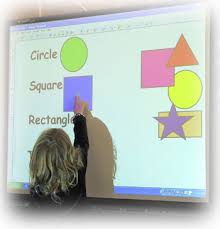
One piece of modern classroom technology that I am fortunate enough to use on a daily basis in my own classroom is the Smartboard. The Smartboard is an interactive whiteboard. It acts as a traditional whiteboard in that you can write on it with the Smart pens, but there is unlimited space and there are a multitude of tools that you can use. It allows the teacher to create slides to present/teach a lesson. If there is internet access, the teacher can show webpages and manipulate the webpage by freezing the image and then writing on the page or highlighting the important pieces. One of the best features of the Smartboard is that it is a touchscreen and the students can interact with the material by using the pens or their finger. The Smartboard is fun and easy to use for both teachers and students.
Thursday, November 8, 2012
Web 2.0 tools
One Web 2.0 tool I can easily use in my third grade classroom is Quizlet.
How can I use Quizlet? I teach Reading (Language Arts) and Math. Each week our reading series presents the students with a list of 6-8 vocabulary words that go along with the main text selection. My students would have fun practicing the meaning of these vocabulary words with online flashcards on Quizlet.
In Math, I can use Quizlet to have students practice/memorize their multiplication facts. I could also have my students study their math vocabulary that is required for each chapter.
Another Web 2.0 tool I could see myself using in the classroom is ToonDoo.
ToonDoo is an online tool that allows students to be creative while showing what they learned about a specific topic. I can assign my students to create a comic using specific vocabulary words, specific phonics skills (like compound words, words that end in suffixes, etc), or even to practice their spelling words. I could assign students to create a comic that summarizes a story we read in class or a book they read on their own. This tool lends itself to many academic purposes.
How can I use Quizlet? I teach Reading (Language Arts) and Math. Each week our reading series presents the students with a list of 6-8 vocabulary words that go along with the main text selection. My students would have fun practicing the meaning of these vocabulary words with online flashcards on Quizlet.
In Math, I can use Quizlet to have students practice/memorize their multiplication facts. I could also have my students study their math vocabulary that is required for each chapter.
Another Web 2.0 tool I could see myself using in the classroom is ToonDoo.
ToonDoo is an online tool that allows students to be creative while showing what they learned about a specific topic. I can assign my students to create a comic using specific vocabulary words, specific phonics skills (like compound words, words that end in suffixes, etc), or even to practice their spelling words. I could assign students to create a comic that summarizes a story we read in class or a book they read on their own. This tool lends itself to many academic purposes.
Thursday, November 1, 2012
Technology setbacks
Technology is quickly becoming a critical component of today's teaching. There are many ways for teachers to include one or more forms of technology into her teaching daily. However, with the advantages of technology also come potential setbacks.
One obstacle I've had recently with technology was when I was trying to show my third graders the Conjunction Junction clip from my School House Rock DVD. I had not yet used my video player on my computer yet this school year, but I followed the procedures I used last year to get a video to play. Well, a lesson well learned that you should always preview your technology before class begins. The movie player was not starting up as it should have so I tried to open the file using a different media player. After several attempts, and the class getting restless, the screen ended up freezing so I had to abort my plan. Instead of watching the video, we completed a practice page on conjunctions with the promise of viewing the video the next day. I made sure the next day to get the video up and running correctly before my school day began so I was prepared to show the video.
When using technology, especially as a main component of your lesson, it is a great idea to always have a back up plan, just in case something doesn't go as planned.
One obstacle I've had recently with technology was when I was trying to show my third graders the Conjunction Junction clip from my School House Rock DVD. I had not yet used my video player on my computer yet this school year, but I followed the procedures I used last year to get a video to play. Well, a lesson well learned that you should always preview your technology before class begins. The movie player was not starting up as it should have so I tried to open the file using a different media player. After several attempts, and the class getting restless, the screen ended up freezing so I had to abort my plan. Instead of watching the video, we completed a practice page on conjunctions with the promise of viewing the video the next day. I made sure the next day to get the video up and running correctly before my school day began so I was prepared to show the video.
When using technology, especially as a main component of your lesson, it is a great idea to always have a back up plan, just in case something doesn't go as planned.
Thursday, September 27, 2012
Teachers & Legal Issues
One legal issue I am concerned about is teachers using social media, and particularly Facebook.
There are actually several points to consider when discussing teachers on Facebook.
-Should teachers be friends with students?
-Should teachers be friends with parents?
-Should teachers be allowed to have Facebook accounts at all?
Do I think teachers should be banned from having Facebook accounts? No.
Do I think teachers should be friends with their students? Absolutely not.
Do I think teachers should be friends with parents? No. There are plenty of other people out there to be friends with. Don't put yourself at risk. You never know who you can trust.
Teachers have a right to a private life. Facebook is a great way to stay in touch with friends and family. Teachers do, however, need to be careful about what they post and what is posted on their wall. I think it is more challenging for teachers fresh out of college to manage their Facebook accounts as there are often tagged photos that may not be appropriate for a professional teacher to put out there. Fortunately, there are many privacy settings to take advantage of. Just be careful of what you post and decide whether or not it's worth your career...
An interesting article from NPR on the subject. Click here
There are actually several points to consider when discussing teachers on Facebook.
-Should teachers be friends with students?
-Should teachers be friends with parents?
-Should teachers be allowed to have Facebook accounts at all?
Do I think teachers should be banned from having Facebook accounts? No.
Do I think teachers should be friends with their students? Absolutely not.
Do I think teachers should be friends with parents? No. There are plenty of other people out there to be friends with. Don't put yourself at risk. You never know who you can trust.
Teachers have a right to a private life. Facebook is a great way to stay in touch with friends and family. Teachers do, however, need to be careful about what they post and what is posted on their wall. I think it is more challenging for teachers fresh out of college to manage their Facebook accounts as there are often tagged photos that may not be appropriate for a professional teacher to put out there. Fortunately, there are many privacy settings to take advantage of. Just be careful of what you post and decide whether or not it's worth your career...
An interesting article from NPR on the subject. Click here
Sunday, September 16, 2012
Portfolios
Portfolios can be of great value when used effectively.
A portfolio is a way for students to compile a collection of their work over a period of time. This allows the student to see their progress over time, and it is a great way for students to really see how much they are learning in school. It should be something each student is proud of and a way to show off their accomplishments. In addition, it allows student choice, so they have ownership over their work.
A portfolio can be very valuable for the teacher as well. When students keep a portfolio of their work, it allows the teacher to evaluate the student's growth and progress over time. I also believe that a teacher can evaluate her own teaching, because a portfolio should reflect the objectives that were taught. If it is a writing portfolio, for example, the teacher can easily see if the students understand how to write a specific genre of writing, or if the students can write a paragraph in the correct format. It can be used as both a summative and formative assessment.
Presently, I see a need for online portfolios so students can practice their 21st century skills at the same time as compiling their pieces of work.
A portfolio is a way for students to compile a collection of their work over a period of time. This allows the student to see their progress over time, and it is a great way for students to really see how much they are learning in school. It should be something each student is proud of and a way to show off their accomplishments. In addition, it allows student choice, so they have ownership over their work.
A portfolio can be very valuable for the teacher as well. When students keep a portfolio of their work, it allows the teacher to evaluate the student's growth and progress over time. I also believe that a teacher can evaluate her own teaching, because a portfolio should reflect the objectives that were taught. If it is a writing portfolio, for example, the teacher can easily see if the students understand how to write a specific genre of writing, or if the students can write a paragraph in the correct format. It can be used as both a summative and formative assessment.
Presently, I see a need for online portfolios so students can practice their 21st century skills at the same time as compiling their pieces of work.
Presentations
A teacher must be a good presenter if she wants to keep her students engaged in the classroom. A good teacher should possess the following skills when presenting new information to her class:
- eye contact - Naturally, a teacher will need to reference her lesson plans or teacher manual during a lesson but the majority of the time she should be making eye contact with her students to bring them into the lesson/presentation of material.
- audible, assertive voice - Teachers must be heard by all students in the room, so a teacher should have a loud, audible speaking voice that is not monotone to keep the children's interest.
- knowledge of the topic - When a teacher feels comfortable teaching about a topic or skill, it will come across in the presentation. The teacher should be able to talk freely and casually, because in my opinion, the environment is more inviting to questions from her students.
A few more important tips to be a good presenter in the classroom:
- keep reading to a minimum
- allow enough time for students to copy notes (when applicable)
- keep the presentation interesting and attention-grabbing but not too busy
- give real life examples or personal experiences
Wednesday, September 5, 2012
Evaluating textbooks
There are several reasons why teachers should know how to effectively evaluate a textbook.
First of all, a teacher may be asked to be on a committee for his/her school district to adopt a new textbook series. In this role, the teacher should be able to evaluate different textbooks and be able to form an opinion and support why one textbook is better than the others. Teachers should have an idea of what to look for when judging new texts and determine the quality of the different products.
Another reason a teacher should be familiar with evaluating textbooks is to weigh the pro's and con's of the text. Evaluating a textbook gives the teacher an opportunity to see what the book has to offer and what is it missing so that he/she may find supplemental materials as necessary. An evaluation will help the teacher decide how to use the materials effectively.
First of all, a teacher may be asked to be on a committee for his/her school district to adopt a new textbook series. In this role, the teacher should be able to evaluate different textbooks and be able to form an opinion and support why one textbook is better than the others. Teachers should have an idea of what to look for when judging new texts and determine the quality of the different products.
Another reason a teacher should be familiar with evaluating textbooks is to weigh the pro's and con's of the text. Evaluating a textbook gives the teacher an opportunity to see what the book has to offer and what is it missing so that he/she may find supplemental materials as necessary. An evaluation will help the teacher decide how to use the materials effectively.
Saturday, September 1, 2012
Journal Review
I read an article that provides a list of online resources and web 2.0 technologies for new special education teachers. I would recommend that any new teacher, or any teacher looking for some new resources, to read this article and browse through these free online resources.
Article citation:
Billingsley, B., Israel, M., & Smith, S. (2011). Supporting New Special Education Teachers: How Online Resources and Web 2.0 Technologies Can Help. TEACHING Exceptional Children, 43(5), 20-29.
Article citation:
Billingsley, B., Israel, M., & Smith, S. (2011). Supporting New Special Education Teachers: How Online Resources and Web 2.0 Technologies Can Help. TEACHING Exceptional Children, 43(5), 20-29.
This
article reports the top areas of concern for new special education teachers and
provides a handful of online web resources for each area of need. The top six
new teacher concerns are: content knowledge and standards, effective
instruction, assessment, behavior management, collaboration with others, and
managing the job/handling stress. This
article offers a variety of resources for the new special education teacher,
and there are many more resources available that were not included. I found the
table presented in the article most beneficial because it organizes and summarizes
so many resources in one easy to read location. It would be a great document for
any teacher to print or save and refer to when needed.
One
disadvantage of the article and table however, is that the reader must go to
the web address of interest and do his/her own reading about the topic. Although
it is great that these online resources offer so much information about
specific topics of concern or need, while browsing through some of them myself,
I found them very overwhelming. It can be hard for new teachers especially to
find what they need if they aren’t sure what they’re looking for to begin with.
Sometimes too much information is not helpful.
This
article would be valuable for beginning general education teachers to become
familiar with as well. I would imagine that new general education teachers have
many of the same concerns as new special education teachers and some of the
resources may provide helpful solutions or insight for them as well. In fact, I
bookmarked the website http://iris.peabody.vanderbilt.edu/resources.html
which offers great advice and strategies for classroom behavior management that
I plan to use this school year for my own benefit.
Another
area the article explores is online social media as a collaborative, supportive
environment for teachers. The benefits
of these kinds of sites are endless and it provides new (and veteran) teachers
access to other teachers all over the world who can share their experiences,
advice, questions, and knowledge with anyone who seeks it. After reading this
article, I find myself wanting to learn more about Wikis and how they can
benefit me and my teaching.
It
is becoming more and more important for teaching professionals at all stages
(new, veteran, master teacher, etc) to become aware of all the incredible
resources that are available on the internet and for no cost! While it can be
time consuming and overwhelming to dive into some of the resources out there,
the benefits can be huge. This article will surely aid new teachers in finding
some helpful web resources for those areas of concern.
Saturday, August 25, 2012
My Educational Purpose Statement
My educational philosophy and purpose for teaching changes the longer I teach and the more I understand about our nation's education system.
August 2012:
August 2012:
I am a teacher because I want to foster a love of lifelong
learning in our future generations. I teach because I enjoy seeing children
learn something new. I am a teacher so that I can help children develop skills
and knowledge that will help them become successful in their adult lives.
Thursday, August 23, 2012
Hello World!
This is my first blog entry for my Xavier University EDMS 550 class. I will be blogging more posts here throughout the Fall 2012 semester.
Subscribe to:
Posts (Atom)